How the Circular Economy is Redefining Sustainability and Driving Business Performance
By Kay Fernandez - Vice President, Global Marketing, Katun Corporation
Earth Month is a perfect opportunity for businesses to examine how sustainability affects their operations in real, measurable ways. Today, Environmental, Social, and Governance (ESG) programs are no longer about broad commitments or symbolic gestures. Successful initiatives deliver clear results: lowering costs, boosting efficiency, and strengthening long-term resilience.
Over the past decade, corporate ESG strategies have evolved from nice-to-have marketing activities into operational imperatives. This shift is driven by rising regulatory requirements, increasing customer demand for transparency, and the need for businesses to connect sustainability to financial outcomes. Organizations are now expected to demonstrate measurable progress, not just intent.
One of the most effective ways to align business goals with ESG objectives is by adopting circular economy principles. The circular economy keeps materials and products in use for as long as possible, emphasizing waste reduction through thoughtful, lifecycle-focused design. By prioritizing durable products, choosing recycled or responsibly manufactured materials, and recycling items at the end of their life, businesses can create lasting value for both the planet and their bottom line.
Where Sustainability and Efficiency Meet: The MFP Fleet
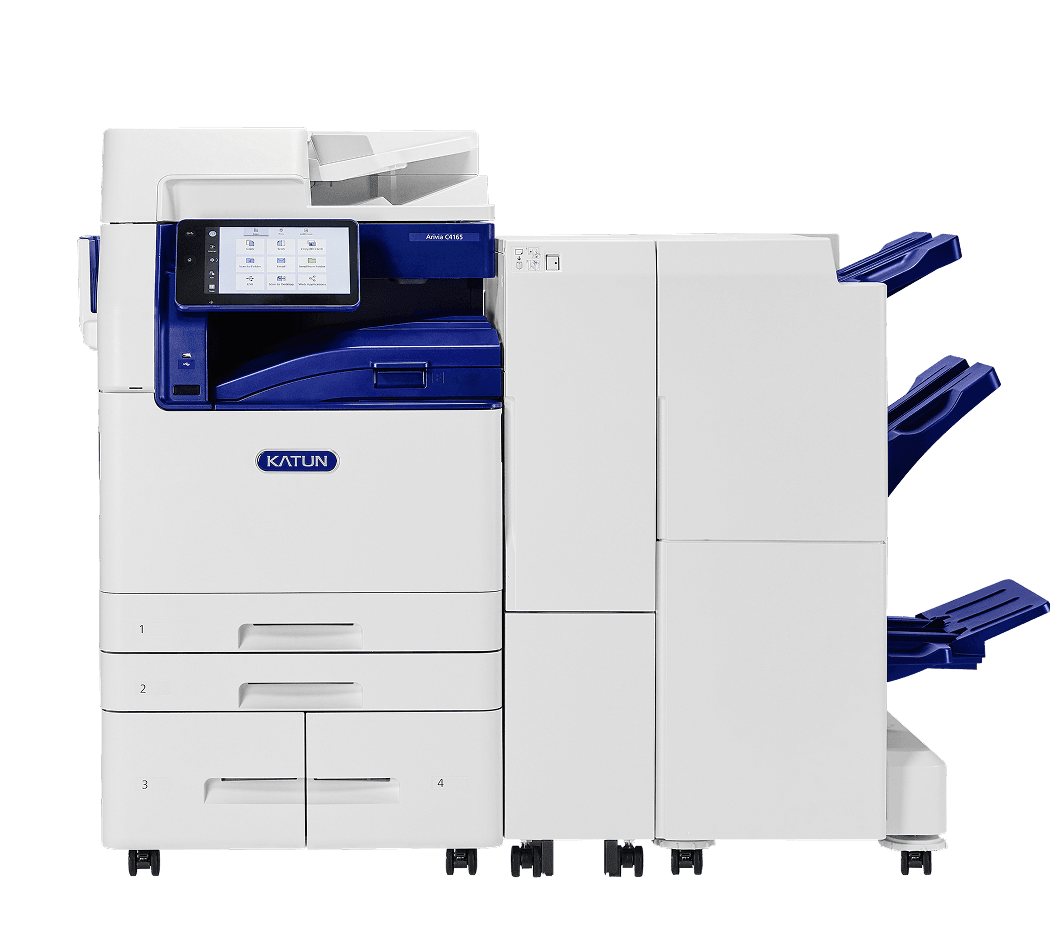
A practical example of this approach is found in the management of multifunction printer (MFP) fleets. Print environments provide a measurable way to see how sustainability and performance intersect. Today’s MFPs, like Katun’s Arivia line, are highly efficient operational assets. These energy-efficient devices reduce power consumption, lowering operating costs, especially across large fleets. At the same time, their advanced engineering, with fewer moving parts and lower heat requirements, extends device lifespans, reduces maintenance needs, and minimizes downtime, ultimately keeping machines in the field for longer.
These features reduce costs and decrease the need for new purchases, demonstrating how circular, sustainability-focused strategies can deliver real business impact.
Unlocking Value with Eco-Friendly Consumables
Consumables are another area where circular economy principles drive measurable impact. Eco-friendly, OEM-alternative parts and supplies, like remanufactured or refillable toner cartridges, extend material lifecycles, reduce waste, and lower per-page printing costs, making sustainability a practical, operational advantage.
Innovation is taking these benefits even further. For example, Katun’s industry-first ecoKAP™ refillable toner cartridge can be reused up to three times, delivering consistent, high-quality performance while reducing the need for new materials. How consumables are handled after use also matters, programs like Katun Collects, available in Europe, allow customers to easily return empty cartridges for responsible reuse and recycling.
For businesses, the benefits are clear: lower costs, less waste, and reliable results. Integrating circular and eco-friendly consumables into everyday operations allows companies to do more with less, supporting both the bottom line and environmental goals.
Making ESG Measurable and Marketable
Circular practices offer more than cost savings; they can also create a competitive advantage. Organizations that demonstrate real impact stand out, especially office technology dealers who can strengthen customer relationships by offering solutions that combine performance with environmental responsibility.
Programs tied to measurable outcomes, like reforestation or carbon offsetting linked to print usage, turn everyday operations into meaningful environmental action. These initiatives advance ESG goals while also creating value for providers and their customers.
For example, Katun’s Print It Plant It Program, part of Katun’s Workplace Solutions portfolio, executed in partnership with Print Releaf, links print usage to real-time environmental impact, planting trees for pages printed. This seamlessly allows companies to offset their footprint and integrate sustainability directly into daily operations. By connecting circular practices in devices and consumables to visible, trackable outcomes, businesses can turn environmental responsibility into a tangible market advantage.
Operational Sustainability That Pays Off
Sustainability is increasingly driving operational efficiency. Optimized logistics, carbon-neutral shipping, and electric vehicle fleets can lower emissions while reducing costs through smarter route planning and fuel use.
At the same time, local sourcing and regional remanufacturing help shorten supply chains, reduce risk, and lower carbon impact. Within operations, adopting renewable energy, reduced packaging, and on-demand production are cutting waste and improving cost efficiency.
At Katun’s European Distribution Center in the Netherlands, we've implemented solar energy, transitioned to plastic-free packaging, and adopted on-demand box production. These initiatives demonstrate that well-executed sustainability delivers both environmental and financial benefits.
A New Definition of Value
Sustainability is no longer a side initiative, it’s central to how value is created, measured, and sustained. In the office technology industry and beyond, customers are investing in long-term outcomes that benefit both their business and the planet. Cost efficiency, reliability, and sustainability are now inseparable, and organizations that deliver across all three gain a clear competitive advantage.
This Earth Month, the most important shift is in execution. Leading organizations have operationalized sustainability, embedding circular design, adopting efficient technologies, and prioritizing measurable impact. In doing so, they are not just reducing their environmental footprint; they are building stronger, future-ready businesses.
Simplify Your Success
We’re here to help you succeed. Let us be your trusted ally in the ever-evolving print industry.
Get Started